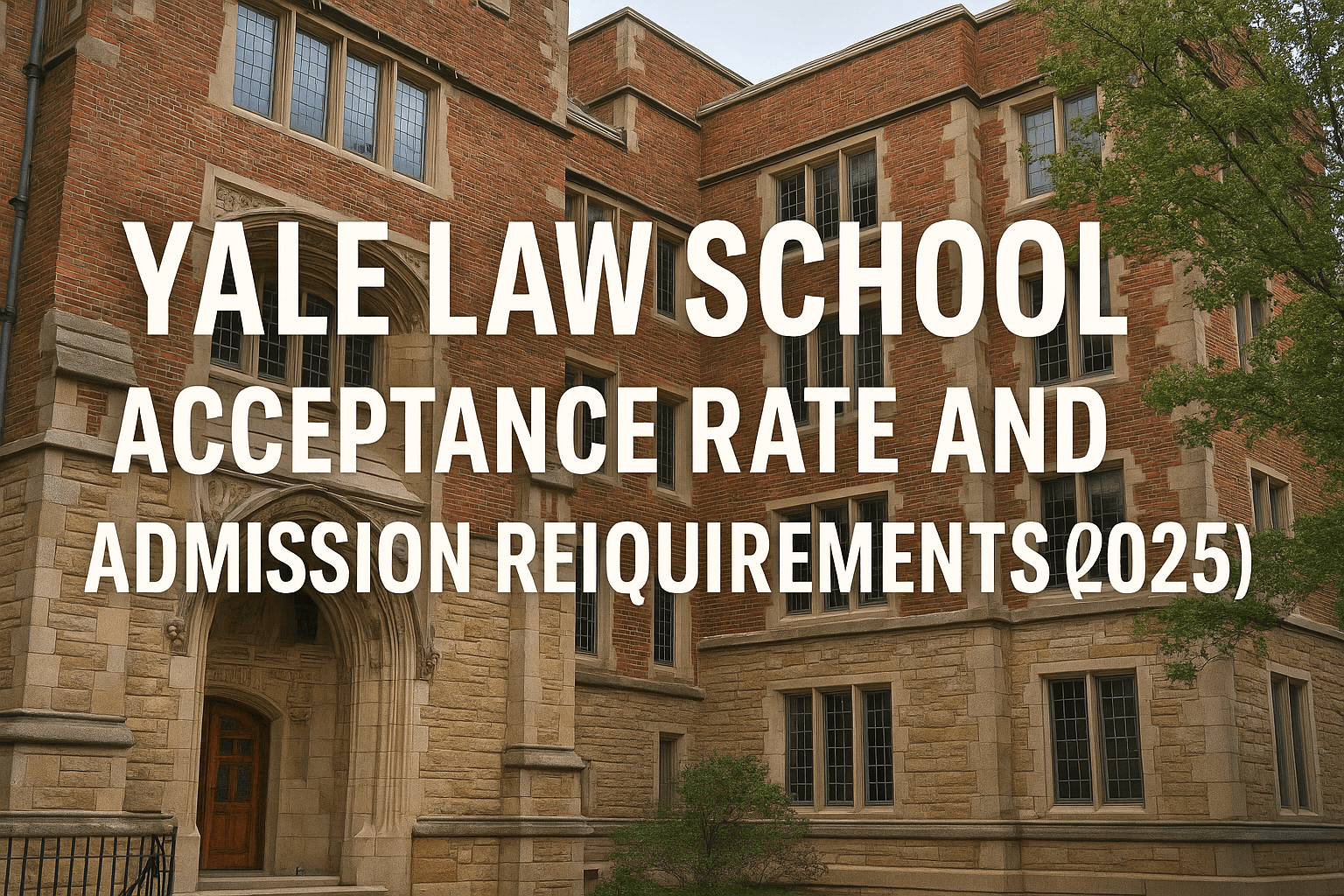
Have you ever considered studying law? How about the idea of pursuing this noble profession at one of the world’s leading law schools? Today, we’re going to take you through the journey of understanding what it takes to gain admission into Yale Law School. This prestigious institution, with a rich history and reputation for academic excellence, is located in the heart of New Haven, Connecticut. The program will challenge you intellectually and prepare you for a successful and dynamic career in law. In this article, you’ll receive detailed and updated information on Yale Law School’s acceptance rate and admission requirements as of 2025.
Yale Law School At A Glance
Known as a global leader in law education, Yale Law School provides an enriching academic experience in an intimate, supportive environment. It offers a three-year, full-time Juris Doctor (JD) program with the option to pursue specialized fields such as international law, environmental law, corporate law, and more.
Tuition and Financial Aid
Yale Law School might seem expensive at first glance as the tuition fees are approximately $65,792 per academic year. However, a significant portion of students receives financial aid in the form of scholarships, grants, or loans, which greatly alleviates the burden.
Application Deadlines
Applications for Yale Law School are typically open from September until February. Make sure you pay attention to the deadlines to avoid any last-minute panic. Late applications are generally not accepted.
Acceptance Rate
Yale Law School is known for its highly competitive selection process. The acceptance rate is around 6.9%, making it one of the most selective law schools in the United States.
Admission Requirements
To get into Yale Law School, you’ll need more than just good grades. You’ll need to showcase your dedication and commitment to the field of law. Here are the key requirements:
- A bachelor’s degree from an accredited college or university
- Law School Admission Test (LSAT) score
- Your personal statement
- Two letters of recommendation
- Your resume
- A Yale-specific 250-word essay
The Online Learning Experience at Yale Law School
While the majority of Yale Law School’s programs are conducted in-person, there are also online courses available. Online courses are conducted via learning platforms such as Canvas or Blackboard. Throughout these online courses, students have the opportunity to virtually meet and engage with faculty members and classmates, making distance learning an enriching experience.
Pros and Cons of Applying to Yale Law School
Pros
- Renowned faculty
- Small class size ensuring personalized attention
- Rich and diverse course content
Cons
- Extremely competitive admission process
- High tuition fees
Tips for Applicants
It is essential to understand that Yale Law School looks for exceptional individuals who can contribute significantly to the school’s intellectual life. Make sure your application showcases your unique skills, experiences, and aspirations.
- Invest time in your personal statement: It should reflect who you are and why you are interested in law.
- Your letters of recommendation should ideally come from people who know you well and can speak about your abilities and potential.
- The 250-word essay should demonstrate your critical thinking abilities and writing skills.
Final Thoughts
| Category | Details |
|---|---|
| Acceptance Rate | Approximately 5.1% (229 offers out of 4,449 applications) |
| Yield Rate | 86% (198 of 229 admitted students enrolled) |
| Class Size | 204 students |
| LSAT Scores (25th–75th Percentile) | 172–177; Median: 174 |
| GPA Range (25th–75th Percentile) | 3.89–4.00; Median: 3.96 |
| GRE Scores (25th–75th Percentile) | Verbal: 165–169; Quantitative: 160–169; Writing: 5.0–6.0 |
| Application Opens | September 1, 2024 |
| Application Deadline | February 15, 2025 |
| Application Fee | $85 (fee waivers available) |
| Required Tests | LSAT or GRE (no preference indicated) |
| Academic Requirement | Bachelor’s degree (or equivalent) expected by summer 2025 |
| Transcripts | Official transcripts from all post-secondary institutions attended |
| Personal Statement | Required |
| 250-Word Essay | Required |
| Letters of Recommendation | At least two, preferably from professors |
| Optional Materials | Diversity statement, addenda |
| Dean’s Certification | Required post-admission |
| Tuition (2025) | Approximately $73,865 |
| Total Cost of Attendance | Approximately $100,009 (including living expenses) |
| Bar Passage Rate | 96.8% first-time pass rate |
| Employment Rate | Approximately 98% employed in JD-required or JD-advantage positions post-graduation |
| Notable Features | Small class sizes, early access to clinics, flexible curriculum, high Supreme Court clerkship placement |
Yale Law School offers a world-class legal education and an opportunity to be part of a globally recognized institution. This journey is rigorous and demanding, but it can also be deeply rewarding. If you’re someone who thrives in an intellectually stimulating environment, Yale Law School is an opportunity worth considering.
Remember that the application process is a reflection of you – your past achievements, your present involvements, and your future ambitions. With thorough preparation and a lot of persistence, you can seize the opportunity to walk the halls of Yale Law School. Good luck!
References: 1.Yale Law School Website 2. LSAC Official Guide to ABA-Approved Law Schools Website